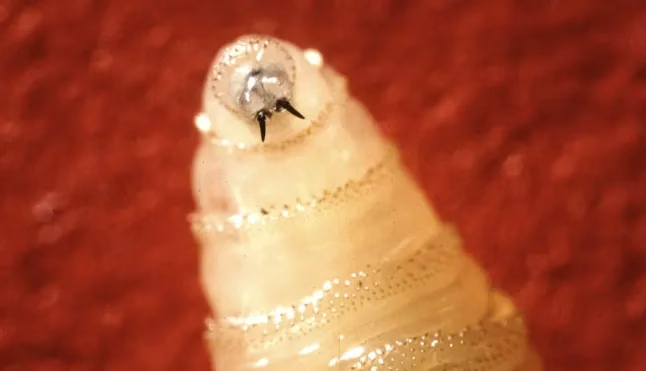
Health authorities have confirmed the first human case in the United States of a rare and potentially deadly parasite known as the New World screwworm.
The case was identified in a patient who recently returned from El Salvador, according to the Maryland Department of Health and the U.S. Centers for Disease Control and Prevention (CDC).
Andrew G. Nixon, a spokesperson for the U.S. Department of Health and Human Services, reassured the public, saying, “The risk to public health in the United States from this introduction is very low.”
While human infections are rare, screwworms pose a significant threat to livestock and wildlife. The parasitic flies lay hundreds of eggs in open wounds of warm-blooded animals. Once hatched, the larvae burrow into living tissue using sharp mouthparts, a process that can be fatal if untreated. Treatment involves careful removal of the larvae followed by thorough disinfection. The parasite is named for its tendency to “screw” deeper into tissue when disturbed, making eradication challenging.
The discovery has raised alarms in the U.S. cattle industry, where a widespread outbreak could have severe economic consequences. The Department of Agriculture estimates a potential infestation in Texas alone could cost the state roughly $1.8 billion.
In response, Agriculture Secretary Brooke Rollins announced plans to construct a sterile fly facility in Texas. These facilities release sterilized male flies to suppress the wild population by preventing successful breeding, a method that helped eradicate screwworms from the U.S. over six decades ago.
No animal cases have been confirmed in the U.S. this year, but scientists warn that rising global temperatures may allow the parasite to spread northward from South and Central America.
Get Fresh updates from The Elvis Clifford Media as they drop via X, Facebook and Instagram