
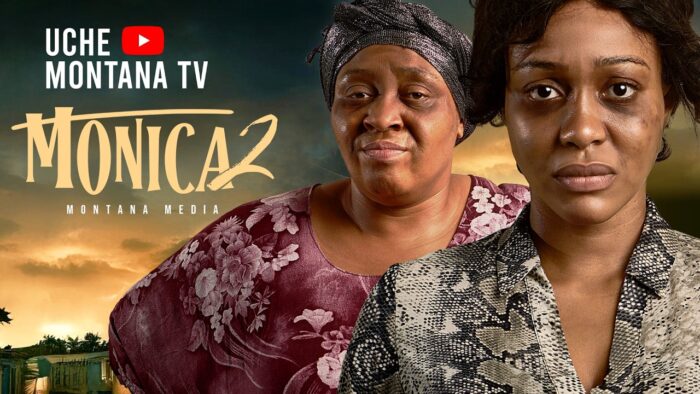
Everybody called Mama Monica wicked… but I think we missed the real villain in Uche Montana’s Monica.
Ever since Uche Montana’s Monica came out, almost everybody has had the same opinion about Mama Monica. The internet has called her everything from evil to wicked, a witch, a curse and the bane of Monica’s existence. Honestly, I understand why. There were moments I wanted to enter my screen and ask the woman if Monica had personally offended her before she was born.
But after watching the movie and sitting with it for a while, I realized I didn’t see Mama Monica the way everyone else did.
Before anybody comes for me, let me make this clear. I am not defending her actions. She was wrong on so many levels. Monica deserved so much better. But I also don’t think Mama Monica woke up every morning because she hated her daughter. I think something much deeper was going on, and if you paid close attention to the story, you could almost see it.
Mama Monica wasn’t raising Monica. She was raising another version of herself.
The first thing I saw wasn’t an evil woman. I saw a woman who was once a first daughter herself. The kind of first daughter many African families produce. The one who never really got to be a child because she was too busy raising everyone else. The one who sacrificed her dreams because there were younger siblings to train, bills to pay, mouths to feed and responsibilities that somehow landed on her shoulders simply because she happened to be born first.
Then she got married, started her own family and life decided to play a cruel joke on her by giving her a first child who was also a girl. Monica. From that very moment, I honestly think Mama Monica had already written Monica’s life for her. In her mind, being the first daughter wasn’t just a title. It was an assignment. It meant sacrifice. It meant putting everybody else first. It meant carrying the family on your back whether you liked it or not. So every time Monica tried to build a life for herself, Mama Monica didn’t see a daughter chasing her dreams. She saw someone trying to abandon responsibilities that she believed belonged to her. That is why I don’t think she deliberately wanted to destroy Monica’s life. I genuinely think she believed she was preparing Monica for life the only way she knew how.
Think about the first time Monica wanted to get married. Mama Monica never saw love. She saw escape. Every time Monica wanted to move on, all Mama Monica could think was, “Na me you wan leave am for?” That line wasn’t just frustration. It was trauma speaking. To her, Monica hadn’t even suffered enough yet. She hadn’t carried enough. She hadn’t sacrificed enough.
Then there was that unforgettable scene where Monica told her father, lying on his sick bed, that she had been granted opportunity to go for a structured learning program in a fashion school in Paris. Did you notice Mama Monica’s reaction? It wasn’t excitement. It wasn’t pride. It was disbelief. Almost like she couldn’t understand why Monica should even be dreaming that big. To me, that wasn’t the reaction of an evil woman. It was the reaction of someone who never had the chance to choose herself and couldn’t understand why her daughter should. Sadly, this still happens in many African homes.
Many first daughters are raised to believe that being “Ada” automatically means becoming a second parent. You become everyone’s provider. Everyone’s helper. Everyone’s problem solver. And the moment you choose yourself, you’re suddenly selfish. That is why finding out that Monica was inspired by a true-life story made the film even more heartbreaking. Because this wasn’t just fiction. This is somebody’s reality.
Was Monica actually the jealous one?
Something else kept bothering me throughout the movie. Mama Monica constantly believed she knew Monica too well. She always accused Monica of being jealous or unwilling to support her siblings. Meanwhile, I kept asking myself… Wasn’t Mama Monica the jealous one? Not jealous because Monica had money. Jealous because Monica had opportunities she never had. She genuinely believed Monica’s life was easy, forgetting that Monica was carrying responsibilities that would break most people. Instead of thinking, “My daughter shouldn’t suffer the way I suffered,” she unconsciously believed, “If I suffered, you must suffer too.” That’s the scary thing about generational trauma. Sometimes the people passing it down don’t even know they’re doing it.
Can we please talk about Sharon?
Now, let’s leave Mama Monica for a minute because Sharon deserves her own paragraph. Actually, her own award. Because where exactly do they manufacture that kind of audacity? From the very first day she entered that family, she came with nothing but disrespect. She was rude. Entitled. Insensitive. Condescending. Every sentence that came out of her mouth sounded like it was designed to provoke somebody.
Now, I know people will naturally argue that Sharon behaved that way because the family never respected Monica, so she simply followed their example. I understand that argument. I just don’t think it’s enough. Your environment can influence you, yes. But it shouldn’t completely excuse bad character. There are people who grow up in toxic homes and still choose kindness. Sharon simply didn’t. That was her choice. But I have to give credit where it’s due. The actress absolutely nailed that role. She made Sharon so believable that every scene with her felt personal.
Ironically, Sharon became Mama Monica’s greatest punishment. The same woman who spent years making Monica’s life difficult eventually met someone who treated her with the same lack of respect she had shown Monica. Life has an interesting way of coming full circle.
Everybody loved Monica… until it was time to love Monica
Another thing I couldn’t ignore was the level of entitlement everybody had towards Monica. Mama Monica, Chika, Bobo, even Sharon. It was almost as though Monica’s purpose in life was to keep everyone else comfortable. Need money? Call Monica. School fees? Monica. Hospital bills? Monica. Capital to start business? Monica. Nobody stopped to ask what Monica wanted. Nobody asked whether she was tired. Nobody asked if she needed saving too. It almost felt like Monica stopped being a daughter years ago and became the family’s personal investment. Her value was tied to what she could provide, not who she was.
The real villain was Papa Monica
Now, I know this might be unpopular, but I honestly think Papa Monica was the real villain. Yes, Mama Monica was loud. She made the decisions. She controlled the household. But Papa Monica enabled everything. People often call him kind. I don’t. To me, he was weak. He watched Monica suffer. He knew his wife was wrong most of the time. He saw the emotional damage happening right in front of him. Yet he remained silent. He would quietly advise Monica because she was the only one who listened, but when it came to standing up for her or putting his foot down as the head of the family, he disappeared.
Sometimes silence is just as destructive as shouting. Peace that comes from refusing to confront injustice isn’t really peace. It’s avoidance. And Monica paid the price for it.
What really is the rule to parenting?
One thing I found interesting was that I don’t think Mama Monica ever believed she was a bad mother. She genuinely thought she was doing the right thing. She raised her children according to the only version of motherhood she knew. To her, children were contributors. Children were providers. Children existed to help the family survive. Then Chika did something Monica never could. She challenged her. When she boldly said she refused to become the new Monica, I literally paused the movie. Because that was the first time someone openly rejected the cycle. It immediately made me wonder… What really is the rule to parenting?Is there even a rule? Or are most parents simply raising children based on how they themselves were raised?
Maybe that’s why so many unhealthy family patterns continue. People cannot teach what they never learnt. People cannot give what they never received.
Forgiveness is beautiful… but let’s stop pretending it’s easy
By the time the movie ended, I couldn’t stop thinking about forgiveness. At the end of it all, you’re expected to forgive. Forgive the hurt. Forgive the betrayal. Forgive the years you lost. Forgive the people who broke your heart. The Bible teaches forgiveness. Spiritually, forgiveness gives us peace. God forgives us, so we are expected to forgive others too. But can we all agree on something? Forgiveness is painful. It is hard. It is messy.
Sometimes you’re forgiving people who never apologized. Sometimes you’re forgiving people who still believe they did nothing wrong. Sometimes you’re forgiving for your own peace, not because they deserve it. And that is one of the hardest things anyone can do. Yet somehow, it is also one of the most beautiful, not because it erases the pain, but because it stops the pain from controlling the rest of your life.
My final thoughts
For me, Monica wasn’t just about a wicked mother. It was about generational trauma. It was about the burden placed on first daughters simply because they were born first. It was about fathers who confuse silence with peace. It was about families that mistake sacrifice for love and entitlement for responsibility. Most importantly, it was about the choice every generation has to either continue unhealthy cycles or finally break them.
Some people watched Monica and saw a villain. I watched it and saw an unhealed woman raising her daughter from the place of her own pain. Understanding her doesn’t excuse her. It simply reminds us that hurt people often raise hurt people. And maybe that’s why Monica has stayed with so many of us. Because if we’re being honest, this wasn’t just Monica’s story. For many people reading this, it was home.
Get Fresh updates from The Elvis Clifford Media as they drop via X, Facebook and Instagram
