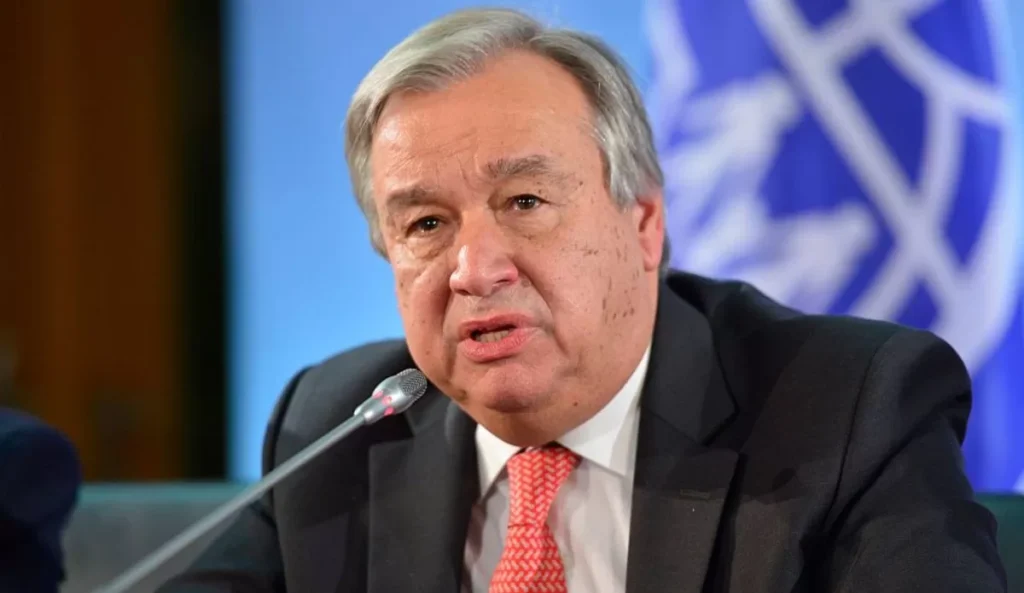
UN Secretary-General António Guterres has strongly condemned the killing of six Palestinian journalists in Gaza, calling for an independent and impartial investigation into the incident.
The journalists, five of whom worked for the Al Jazeera network, were killed in what the UN described as a targeted Israeli strike in Gaza City on Sunday, August 10, 2025. Speaking at a news briefing in New York on Monday, August 11, UN spokesperson Stéphane Dujarric said the attack shows the extreme dangers media workers face in the ongoing conflict.
“These latest killings highlight the extreme risks journalists continue to face when covering the ongoing war,” Dujarric said. “The Secretary-General underscores that journalists and media workers must be respected, protected, and allowed to carry out their work freely, free from fear and harassment.”
According to UN figures, at least 242 journalists have been killed in Gaza since the war began nearly three years ago.
The briefing also highlighted the worsening humanitarian situation in the enclave. The UN Office for the Coordination of Humanitarian Affairs (OCHA) reported that over 100 children have died from malnutrition since October 2023. Acute hunger is rising sharply, with more than 300,000 children now at severe risk.
The UN World Food Programme (WFP) noted that over a third of Gaza’s population goes days without food, while the UN Food and Agriculture Organisation warned that only 1.5 per cent of cropland remains both accessible and undamaged, signalling a near-total collapse in local food production.
Humanitarian agencies continue to face severe restrictions on aid delivery. On Wednesday, the UN and partners collected food and hygiene kits from the Kerem Shalom/Karem Abu Salem crossing, but supplies were taken directly from trucks before reaching their destinations, reflecting the desperation on the ground.
WFP estimates that Gaza requires over 62,000 metric tonnes of food per month to meet basic needs, yet current entry levels fall far short. Fuel shortages are also crippling essential services, with Israel allowing an average of only 150,000 litres daily, well below minimum requirements. The Palestine Civil Defence has warned that more than half its ambulances are out of service due to a lack of fuel and spare parts.
“Israeli authorities must allow aid to enter through all crossings and via all available corridors so that humanitarians can deliver, at scale, in a safe and dignified manner, to reach the most vulnerable, including women, children, and older people,” OCHA stressed.
The UN continues to press for both the protection of civilians and unimpeded humanitarian access, warning that without urgent action, Gaza’s crisis will deepen even further.
Get Fresh updates from The Vibe Café as they drop via X, Facebook and Instagram